

FAQ - Frequently asked questions
Silicone is more resistant to high temperatures (up to 260°C) and doesn't melt as easily as nylon when in contact with a hot pan.
Yes, it can scratch delicate non-stick coatings. For such pots, use utensils with a silicone tip.
It's best to rinse it under a strong stream of water immediately after use or use a dish brush. A sponge will snag on it.
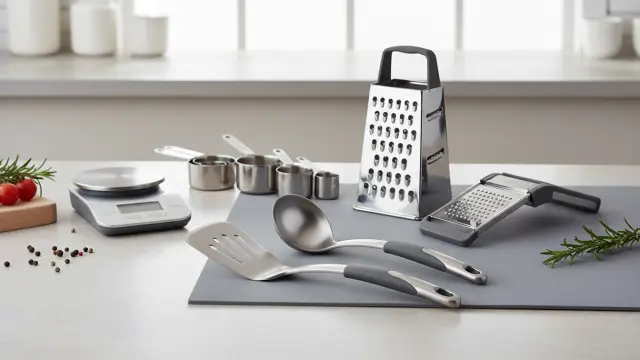
A flat electronic scale with a tare function, weighing with an accuracy of 1g (or 0.1g for coffee lovers/bakers).
The best is a classic waiter's corkscrew with a two-step lever. Electric ones are convenient but require charging.
A matter of taste, but check the mechanism. A ceramic mechanism is more durable than a steel one (which can corrode from salt).
The hole is for draining water, and in some models, it measures one serving of dry spaghetti.
Yes, cheap presses often bend with hard garlic and leave a lot of waste. Good models press the entire clove.
Tongs with a locking mechanism are more convenient for storage in a drawer (they take up less space).
They require frequent replacement because wood absorbs odours and moisture. They should not be washed in the dishwasher.